

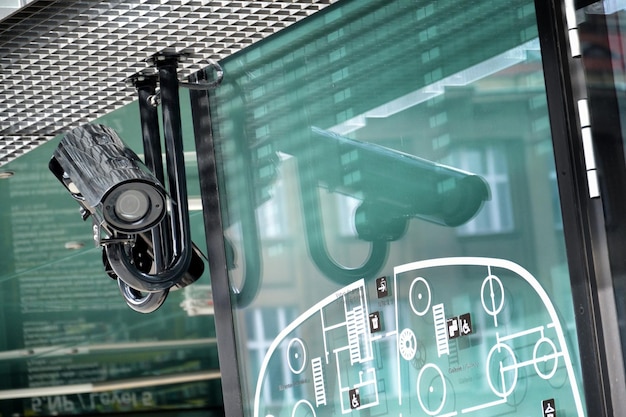
Welcome to the world of police surveillance cameras and TSMC chips! So, have you heard of Big Brother with a camera in his hand, or of tiny but powerful chips? It sounds like science fiction, but it’s reality – and it’s pretty exciting, though sometimes a bit scary too. Today we’re going to look at how these technologies improve our safety, but also where the limits lie. And don’t worry, there’ll be plenty of fun too!
CCTV cameras and TSMC chips: the future of security or Big Brother at its finest?
In our increasingly connected world, police surveillance cameras and the latest TSMC chips play an important role. They are meant to protect us, yet at the same time this technology is sparking debates about privacy and data protection. So why not take a look behind the scenes and see what really goes on there? One thing is certain: innovation goes hand in hand with a great deal of responsibility here – and sometimes leads to surprising insights.
How police surveillance cameras make the city safer
Have you ever walked through a busy city and noticed the cameras on every corner? These CCTV cameras are designed to help detect and solve crimes more quickly. They’re like the police’s digital watchdogs – always alert, always present. It’s a balancing act, though, to increase security without invading people’s privacy. But let’s be honest, who wants to be watched at every turn? And this is where technology comes in: the latest police surveillance cameras are fitted with high-resolution sensors that deliver clear images even in low light. Pretty cool, isn’t it?
What do TSMC chips have to do with all this?
This is where the next big player comes into the picture: TSMC, the Taiwan Semiconductor Manufacturing Company. It manufactures the all-rounder chips found in almost every electronic device – from smartphones to the latest AI devices. The 1.4-nm chip, to be precise, is so small that it’s barely visible. And yet it’s driving huge advances in performance and energy efficiency. For police surveillance cameras, this means: more power, lower energy consumption – perfect for widespread deployment across the whole city. Sounds almost too good to be true, doesn’t it?
When does data protection become magic?
When technology and privacy clash, things get tricky. Whilst police surveillance cameras help track down criminals, data protection advocates are asking questions such as: “How long is the data stored?” or “Who has access to the footage?” This is where the debate begins. Manufacturers are trying to strike a balance through encrypted transmissions and automatic deletion algorithms, so that we don’t all become ‘transparent’ individuals. The question is: is that enough, or should we be insisting even more strongly on our privacy?
The impact of TSMC chips on the stability of our security systems
TSMC’s chips are at the heart of modern cameras and sensors. Their tiny size makes everything more powerful – everything runs at lightning speed, and data is processed in seconds. This means that police surveillance cameras can react extremely quickly when needed. That’s an advantage – but what happens if faulty chips end up in the wrong hands? Exactly – that’s a debate that sometimes seems never-ending. What’s needed here are clear rules and, of course, a pinch of humour to take the whole thing in your stride.
But it is not just in the field of security that TSMC chips are worth their weight in gold. They are also driving forward developments in artificial intelligence. AI algorithms recognise faces, number plates or even suspicious behaviour. They help to make surveillance smarter and less intrusive. For example: a clever algorithm only triggers an alarm when something suspicious is actually happening. Sure, that sounds great, but who programmes them, and what if they ever set off a false alarm? These are questions we shouldn’t ignore.
New legal challenges arising from the use of modern surveillance technology
Technology is evolving faster than legislation can keep up with. Court rulings on Parship contracts are just the tip of the iceberg – when it comes to police surveillance cameras and TSMC’s chips, the situation is even more complex. Lawmakers are currently trying to strike the right balance between security and data protection. This is sometimes as tricky as a sub-optimal kebab – no matter how you turn it, something always seems to be a bit off. It’s important that we all remain vigilant when it comes to our rights. After all, without clear rules, these cameras could turn into a paranoid surveillance machine.
Why a clear legal framework makes everything easier
Imagine you’re sitting on the sofa, and suddenly you know exactly what’s allowed and what isn’t. No more running back and forth, no more uncertainty. That would make everyday life a lot easier – and would also simplify the use of modern police surveillance cameras and TSMC chips. The solution? Clear, comprehensible laws that strike the perfect balance between security and privacy. The technology is already here – now all we need are the right rules to ensure everything stays in balance.
The fun factor: technology with a touch of humour
Technology can sometimes make you smile. Who hasn’t seen a CCTV camera that seems more interested in its own shadow than in catching a criminal? Or chips so small they could fit inside a needle. And yes, the future looks exciting: Perhaps our police surveillance cameras will soon be sending out little robots to patrol the streets – “Hello, this is your digital friend!” Sound like sci-fi? Perhaps. But who knows what will be possible tomorrow if TSMC continues to make chips this small and powerful.


