

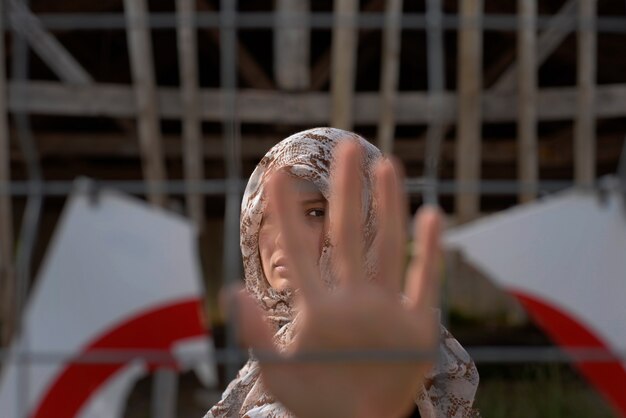
In a world that is spinning ever faster and where news is sometimes just a blink of an eye away, it seems as if our humanity is constantly falling by the wayside. Yet another crisis, yet another piece of news that makes us feel more distant from each other than ever before. But why is all this happening? And what does it have to do with propaganda, social media and the global chill? Today we look at why the loss of humanity is now an issue that affects us all - and, more importantly, what we can do about it before we all become digital zombies.
Why are we losing our humanity in the age of fast media?
It's no secret that the media landscape has changed rapidly in recent decades. Life used to be slow and personal. You knew your neighbours, the news was passed on in the street, from friends or on the radio. Today? We scroll through an endless stream of news, tweets, memes and fake news, and sometimes we ask ourselves: where is there room for genuine compassion? In a way, the loss of humanity today is a side effect of this digital acceleration. Speed makes everything more tangible - but unfortunately also sometimes less emotional.
Digital fast pace as a precursor to a lack of empathy
When everything is just a swipe or a click away, the ability to really listen and show empathy is lost. A quick overview instead of deep feeling - sounds like a bad Tinder match, but is the reality for many news consumers. The constant flood of information makes us numb. The empathy that was aroused years ago when we read stories with a lot of focus has now often given way to a feverish commitment to "quick" clicks.
Propaganda and manipulation: how we are kept at a distance
In recent years, propaganda has experienced a renaissance. Whether political campaigns, social media or even the distorted image in advertising - everything seems designed to manipulate our emotions. Instead of focusing on the human element, we are inundated with slogans, disinformation or generalisations. The result? We are inciting against each other instead of listening to each other. And there we have it: a society that builds borders rather than bridges.
Social media: digital interpersonal relationships on autopilot
Here is the iron truth: social media are probably the biggest accelerator for the loss of humanity today. While they are supposed to connect us with friends, they mostly only focus on superficiality. Likes, shares, emojis - all nice and fast, all nice and emotional, but also extremely fleeting. The empathy that used to come from real conversations is being replaced by short comments that are much more cutesy and pasty than genuine sympathy. A study shows that social media can reduce the capacity for deep empathy - and that's no walk in the park.
The advantages (yes, there are some) of this digital world
Before we sing the praises of total doom, we should also look at the good sides. Fast communication enables quick help, global networks and the sharing of important issues in real time. It's just a question of the right approach. But the problem is that our everyday lives are often so jam-packed with information that we barely have time for real interpersonal encounters. This is the problem: we often neglect the art of simply listening again and showing genuine compassion.
What does the loss of humanity mean for us today?
If we are honest, everyone feels somewhere deep down that something is going wrong. The loss of humanity today can manifest itself in many forms: from social coldness to ignorance in the neighbourhood to the growing distance in relationships. It's like a kind of collective elimination of the compassion that actually defines us. And that is dangerous because it weakens our society in the long term - not just politically, but emotionally and humanly.
Emotional numbness is contagious
Anyone who has ever had the feeling that their heart could burst with empathy quickly realises that the more these feelings cost us, the easier it is to simply push them away. The result is a kind of vicious circle in which emotional numbness affects everyone - whether on the street, in the office or online. The consequence? Less cohesion, less solidarity, less genuine understanding for one another.
Collective memory vs. short-term attention span
In the past, it was normal for stories to be passed down from generation to generation. Today? The binary memory lives in speed. Everything is only interesting for the moment before it disappears again. As a result, we can hardly think beyond the day - let alone about the well-being of others.
The consequences for our society
If the loss of humanity goes unnoticed today, it can have major consequences: a society that is becoming increasingly self-centred, in which compassion is only a marginal phenomenon. In the worst-case scenario, this can lead to polarisation, extremism and a deep divide between people. And that's not what we all want, is it?
What can we do about it? Tips against the loss of humanity today
Here is the good news: each of us can take small steps to stop the loss of humanity today - or at least mitigate it. Sometimes all it takes is a conscious look, an open attitude and the courage to seek genuine contact again.
Conscious digital detox - get out of the screen and into real life
The first step is to consciously put your digital devices away. No Instagram stories, no tweets - just you and the world around you. This helps to sharpen your senses again and strengthen the feeling that humanity also takes place in real life.
Listen more, talk less
A simple but powerful rule: really listen during the next conversation. Don't just wait until it's your turn again, but actively empathise with what the other person is saying. This promotes genuine understanding - and takes the interpersonal relationship to a new level.
Practising empathy in everyday life
Try putting yourself in someone else's shoes. Fetching coffee for a stressed colleague, a moment of silence for someone who is suffering or simply accepting someone else's opinion - these are all small steps that make a big difference.
Community projects and commitment
Those who are actively involved in communities, associations or voluntary work not only do good for others, but also strengthen their own compassion. Once again, we realise that we are not alone, but part of a greater whole.
Conclusion: The way back to humanity - together and with fun!
The loss of humanity today is not a fate that we simply have to accept. It is up to us to live more humanity, empathy and genuine connection again. Sure, the digital world offers fantastic opportunities - but only if we make conscious use of them. Let's reverse the trend together and open our hearts again. Because at the end of the day, it's the small, genuine moments that keep us human - even in a world full of pixels and tweets.


