

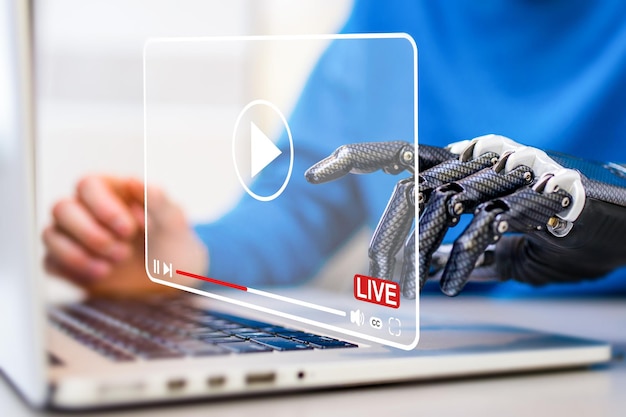
Hey, have you ever thought about why some YouTube videos suddenly seem so strange? You used to be able to clearly recognise whether a video was real or artificially created. Today? Real video and AI generation swim so close together that even professionals can hardly tell the difference. Really exciting - or scary? We take a closer look at why the real masterpieces on YouTube sometimes lose out to AI-improved clips and what this means for our perception.
Real video vs. AI generation: Why it's sometimes hard to tell the difference
In the world of YouTube videos, there is currently a real battle for authenticity and credibility. Whereas previously only the real highlights thrilled audiences, AI-generated clips are now on the rise - and with astonishing quality. The result? Sometimes you ask yourself: is this real or just an artificial replica? And above all: Why is this becoming so difficult at all? It's all down to the rapid advances in artificial intelligence, which have now become so good that they are almost indistinguishable from real videos. But don't worry, I'll take you on a little journey of discovery through the world of real video vs AI generation - and of course, what that means for you.
What makes AI-generated videos so convincing?
AI algorithms are constantly learning - even in real time. They analyse huge amounts of data to create realistic images, voices and movements. The result is videos that look pretty authentic at first glance. Especially with short clips such as YouTube shorts or TikTok videos, it is almost impossible to tell whether a real person is standing in front of the camera or an AI. This is particularly impressive when they imitate familiar faces or scenes without being immediately recognisable. This makes it possible for content creators to achieve great effects with minimal effort.
How do you actually recognise whether a video is genuine?
That's the big question, isn't it? Basically, a few clues now help us, even if they are not always certain. For example:
- Unnatural movements: When movements are strangely incoherent or too perfect.
- Linguistic anomalies: AI-controlled voices sometimes sound too monotonous or slightly unnatural.
- Image quality: AI clips sometimes lack subtleties or there are artefacts that do not look natural.
- Meta-Infos: With YouTube, you should always take a look at the upload date, channel and comments to check the authenticity.
Why is the whole thing so problematic?
Basically, it's not a drama, but it becomes annoying because it makes it harder to be credible when watching videos. Platforms actually only want real content to protect the audience, but AI has simply become too powerful. The problem arises especially when AI videos are used to spread fake news, make manipulation more difficult or simply for cheap entertainment. For you as a viewer, this means: more vigilance, a bit of criticism in the back of your mind and the ability to distinguish between real and fake.
How the YouTube world deals with AI videos
In the debate about real video vs. AI generation, platforms such as YouTube are naturally reacting, but there is no patent remedy yet. It's a bit like a game of cat and mouse: the platforms are developing algorithms to recognise fake content, while the creators of AI videos are developing even more sophisticated methods. With some YouTube channels, you can still tell the difference because they focus on authenticity - real people, real stories. Others are experimenting with AI to improve content or simply to test it. The future will show whether we can still tell the difference between real and AI - or whether we will stop asking ourselves what is real.
So what can you do to check the authenticity of a video?
In times of real video vs. AI generation, it's smart to know a few tricks:
- Pay attention to sources: Is the channel trustworthy? Are there indications of professional content?
- Recognise typical anomalies: Unnatural movements, voices without emotion, unrealistic backgrounds.
- Read comments: What do other viewers say? Is the feedback sceptical or does it confirm the authenticity?
- Check meta data: When was the video uploaded? Are there many similar clips that are all marvellously perfect?
Why is the ability to recognise real video now more important than ever?
Because fake videos with AI are so convincing that they put our trust to the test. Especially with news that has political or social relevance, it's super important not to fall for every trick. This means that you as a viewer should improve your digital literacy - and that doesn't just apply to YouTube, but to all media.
Conclusion: Between real video and AI - what now?
The exciting thing about the story is that the line between real videos and AI generation is becoming increasingly blurred. On the one hand, we are delighted with the technical possibilities, but on the other hand, the challenge remains of keeping an overview. It is important to be vigilant and not be fooled by clips generated at lightning speed. Of course, being a little sceptical not only makes us smarter, but also ensures that we appreciate genuine originals even more. So: open your eyes, prick up your ears and always keep the filters in your head switched on!


