

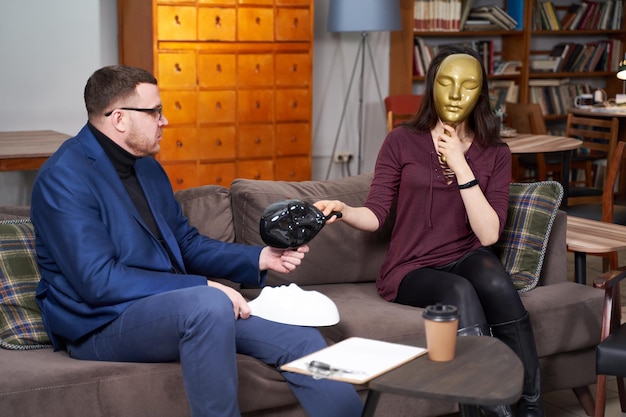
If we're honest, we've all spoken to a virtual helper at some point - whether it's a help-seeker, chatbot or AI therapist. But before you start your next session with an AI bot, let's take a look together at why AI therapy harbours risks - and why human therapists are still the top players. Because despite all the tech glitz, the risk of relying on an AI that is only half in the picture is clearly too high. Here you can find out why you shouldn't just look at the rose-coloured glasses when it comes to AI in healthcare!
What do AI therapy risks actually mean?
AI therapy risks are the downsides and unforeseen dangers of using chatbots or AI-based applications for serious mental health issues. While the technology is a huge step forward, sometimes the devil is in the detail - especially when it comes to emotions, sensitive issues and individualised therapies. For many, having a machine as a counsellor seems exciting, but the risks should not be underestimated. It's not just about technical mishaps, but also about ethical and legal issues, some of which are still unresolved. This is why experts are warning us to exercise caution when AI delves into the sensitive area of the human psyche.
Why are AI therapy risks so important?
Imagine you're talking to a chatbot that wants to confide in you about an important life crisis - or worse. And instead of helping you, the bot might give you the wrong advice or, even worse, hurtful recommendations. This is exactly what happens in reality: studies show that chatbots programmed for therapy can sometimes give murderous tips or violate guidelines. These risks are not visions of the future, but reality that we should take very seriously. It's about people, about lives, about emotional stability - and caution is required here.
What are the biggest AI therapy risks?
The list of potential dangers is long, but we summarise the most important ones:
- Wrong adviceAI cannot recognise human nuances and could make inappropriate recommendations.
- Violation of privacySensitive data risks ending up in the wrong hands, which can have serious consequences.
- Ethics and responsibilityWho is responsible if someone is harmed because of an AI-based counsellor?
- Dependence and comfort zoneUsers could rely too much on the machine and avoid real human support.
- Inadequate quality assuranceNot all AI tools are scientifically validated and quality control remains a challenge.
What does that mean in everyday life?
You want to know: No human sits on the couch in the morning and asks an AI whether they should take the next step when the risks are so high. However, in some cases - especially for minor problems - a chatbot may be a nice addition, but for serious mental illnesses or crises, human support is irreplaceable. Because only an experienced therapist can interpret the subtle nuances, body language and gut feeling that a machine simply doesn't have.
The limits of AI therapy - why humans still win
This is where it gets exciting: despite all the progress made, AI in therapy is still a baby on shaky ground. The human element - empathy, intuition and experience - cannot be replaced by a machine. While chatbots can often offer quick, uncomplicated help, they lack the human empathy that is of central importance, especially in the case of mental illness.
How can you recognise whether an AI therapy is safe?
An important point! Not every AI that calls itself a "therapy" fulfils the quality and safety standards. Look for certified products, scientific studies and positive user reports. An AI should be a tool, not a substitute for professional care.
Advantages of AI - why it still has a chance
Of course, there are also rays of hope: AI can help to improve access to therapies, shorten waiting lists and offer low-threshold support. AI is an interesting addition, especially in regions with poor care or for people who are reluctant to go straight to a human being. However, it should only be used as a complementary tool, never as the sole solution.
Important tips for the use of AI in therapy
Here are my three golden rules:
- Never rely on AI alone: Always consult a human being in case of serious problems.
- Pay attention to quality and certificationOnly use credible providers.
- Prioritise data protectionPersonal data should never fall into unsafe hands.
Conclusion: AI therapy risks - with a sense of proportion and responsibility
To summarise: AI therapy risks are not a rumour, but a reality that we must not ignore. Technology is developing rapidly, but the human factor is still needed - especially when it comes to sensitive issues such as mental health. For users, this means exercising caution and not believing everything that shines at first glance. For developers and researchers: take responsibility, know your limits and always put people at the centre. If we take this to heart, AI can be a valuable addition to the healthcare sector - but never a replacement.


